
Evanston Epoxy Flooring has installed epoxy garage floor systems for 20+ years in Evanston, IL, serving surrounding cities including Lincolnwood, Winnetka, Norridge, Schiller Park and River Grove. A garage floor is the hardest-working slab most houses have, taking hot tires, dripping brine, dropped tools and the weight of a car parked in the same two spots every night.
We build each garage system from the slab up. The concrete is ground open, tested for moisture and repaired where it is cracked or spalled, then coated to a thickness the proposal states in writing. Nothing goes down over old paint or sealer, and nothing is acid etched.
This page covers the garage coating systems we install, how a garage slab gets prepared, the local conditions that decide how a garage floor should be built, and what to expect between the quote and the day you park on it.
Garage Floor Coating Systems We Install
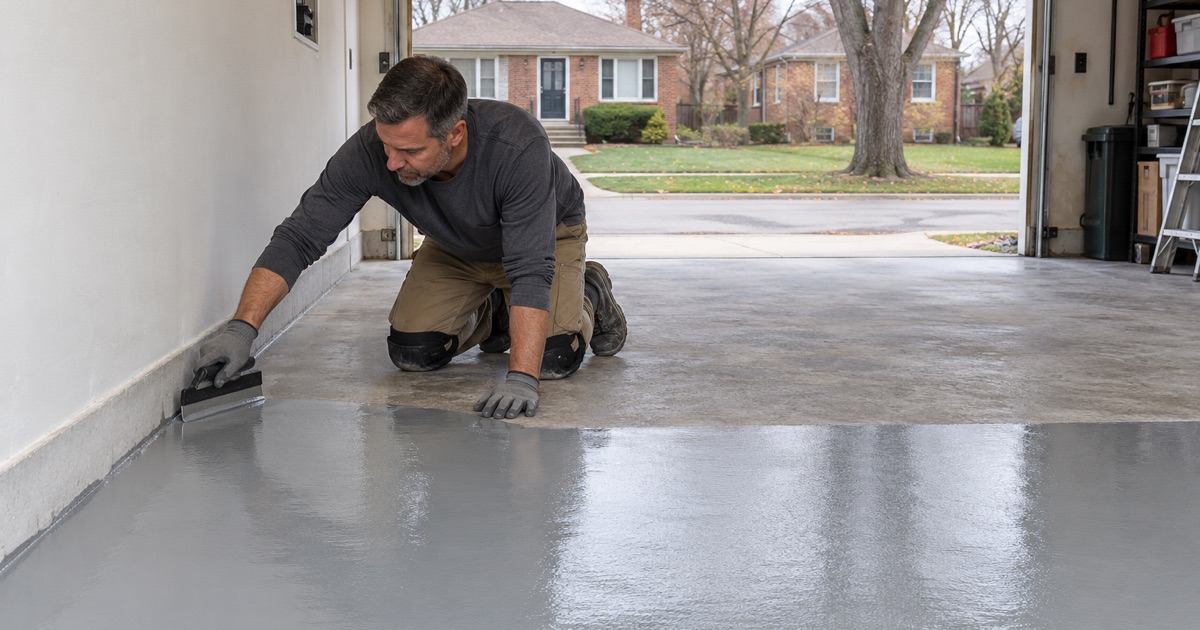
Flake Epoxy Garage Floors
The most requested garage system is a 100% solids epoxy base coat with vinyl flake broadcast into it and a clear polyaspartic topcoat over the top. The flake hides dust and tire marks, adds grip, and comes in blends that can suit the brick, siding or trim of the house. A full broadcast, where flake covers the base completely, gives the most texture and the most forgiving finish.
Under the flake, the epoxy carries most of the build, filling small surface pores and bonding into the ground profile of the concrete. The topcoat is the layer you actually drive and walk on, so we choose one for abrasion, chemical and ultraviolet resistance rather than for shine alone.
Solid Color and Quartz Garage Coatings
A solid color epoxy garage floor is a clean, single-color finish that suits a workshop or a garage that holds more tools and bikes than cars. It cleans easily and takes painted lines for parking spots or work zones without fuss.
Where grip matters more than looks, a quartz aggregate broadcast gives the floor a fine, sandpaper texture that holds up under wet boots and melting snow. The texture is set by the grit we choose and by how heavily the topcoat is rolled over it.
Fast-Cure Polyaspartic Garage Floors
A polyaspartic system cures far faster than epoxy and keeps its color in sunlight, which matters on a garage that faces the street with the door open all afternoon. The tradeoff is a short working window, so it suits a slab that is ready to coat and a crew set up to move quickly. Many of our garage floors combine the two, with an epoxy base for build and bond and a polyaspartic topcoat for speed and UV stability.
Preparing a Garage Slab the Right Way
Diamond Grinding to an ICRI Profile
Every garage slab is diamond ground, or shot blasted on larger floors, to an ICRI concrete surface profile the primer can lock into. Grinding takes off the weak top layer, old sealers, paint and oil-soaked concrete that acid etching leaves in place.
The dust is pulled into an industrial vacuum as we grind rather than swept toward the house. When the grinding is done, the floor is vacuumed again and inspected, because any spot the grinder skipped is a spot the coating will later let go.
Cracks, Spalls and Control Joints
Before coating we fill spalled areas and stable cracks with repair materials made to bond to concrete, and decide joint by joint whether a control joint should be filled or left as a line in the finish. We tell you plainly which cracks are likely to telegraph back through the coating. A floor coating follows the slab under it and cannot stop that slab from moving.
Testing the Garage Slab for Moisture
Garage slabs are often poured with no vapor retarder under them, since the model residential code at IRC R506.2.3 allows it, which leaves the concrete in direct contact with damp soil. We write moisture testing into every garage proposal, starting with an ASTM D4263 plastic sheet test and moving to ASTM F1869 calcium chloride kits or ASTM F2170 probes when we need numbers. A damp slab gets a moisture-mitigation primer rather than a coating that will blister.
Building a Garage Floor for Evanston Conditions
Road Salt and Calcium Chloride Brine
Northern Illinois winters bring calcium chloride brine and rock salt into the garage on every tire and wheel well. On bare concrete that salty water soaks in and scales the surface through repeated freezing and thawing.
A seamless, chemical-resistant topcoat keeps the brine on the surface, where it can be squeegeed out the door, and a light texture keeps the floor walkable while it is wet. We also pay attention to the apron at the door, where the most salt lands and the coating takes the hardest wear.
Attached and Detached Garages Under the Local Code
Evanston rewrote the garage vapor retarder exception when it adopted the 2021 codes, so the exception now covers detached garages and other unheated accessory structures but not attached garages. An older attached garage may still have nothing under its slab, and a new detached one may have nothing either. We find out what is under the concrete before choosing the primer, because the testing and the primer both depend on it.
Curing an Epoxy Floor in a Cold Garage
Resin cures by chemistry, and that chemistry slows sharply on a cold slab. We read the slab temperature and the dew point spread on the day, since a slab too close to the dew point collects condensation and the coating can blush and cloud. An unheated detached garage often has to wait for spring, and we say so instead of coating it anyway.
What to Expect From Quote to Parking
The Written Garage Floor Proposal
Your proposal names the base coat, the flake or finish, the topcoat, the number of coats and the finished thickness. It also lists the repair work, the moisture test and the warranty exclusions, with moisture named first.
Before work starts you also get a written contract and the Home Repair: Know Your Consumer Rights pamphlet, as the Illinois Home Repair and Remodeling Act requires. Products are chosen within the Illinois limit on VOC content for floor coatings, a rule that binds us as the installer and not only the manufacturer.
Install Day and Cure Times
Most of the noise on a garage job is the grinding, which we keep inside Evanston’s weekday and Saturday construction hours so it never runs into a neighbor’s evening. After the last coat, foot traffic comes back first and vehicles later, with the exact times set by the products and the slab temperature. We leave both in writing.
Caring for an Epoxy Garage Floor
A coated garage floor needs little more than sweeping and an occasional damp mop with a mild cleaner. Squeegee winter brine out rather than letting it dry into a white film, and put pads under motorcycle kickstands and jack stands. Hot tire pickup is rare on a properly built system, and parking before the full cure is the most common way to cause it.
- 20+ Years in Business
- Moisture Testing in Every Quote
- Written Proposals