What an Epoxy Garage Floor Job Involves
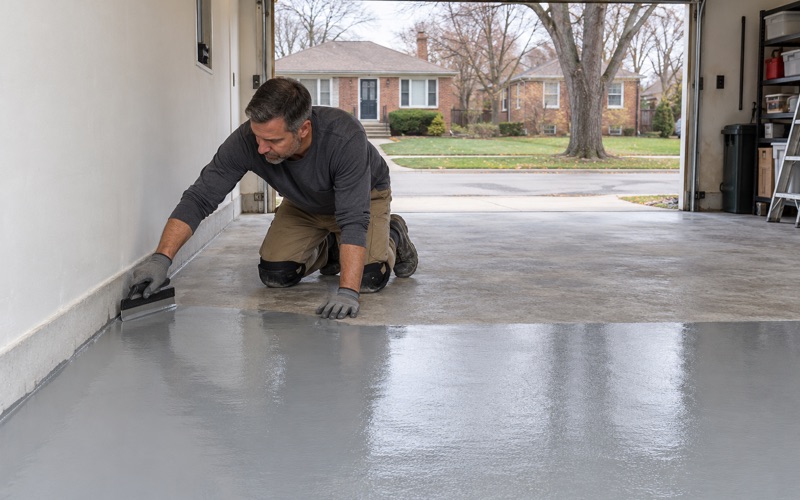
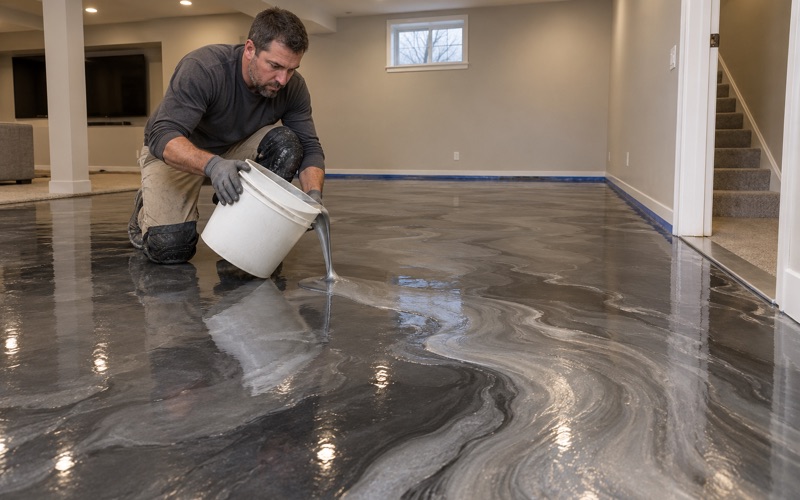
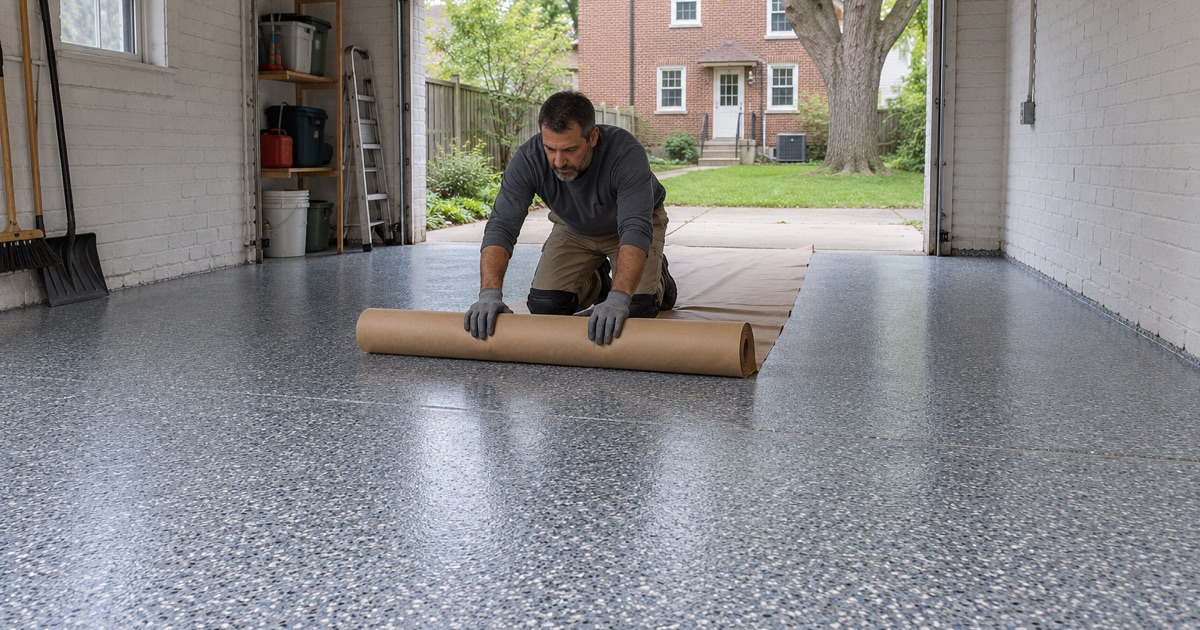
An epoxy garage floor job runs from a slab inspection and moisture test, through grinding, crack repair, primer, body coat and topcoat, to a cure period before the first car rolls in. We write each step into the proposal with the product named. You know in advance which days the garage is out of use and which day you can park on it again.
Grinding Off Sealer and Paint Before Coating
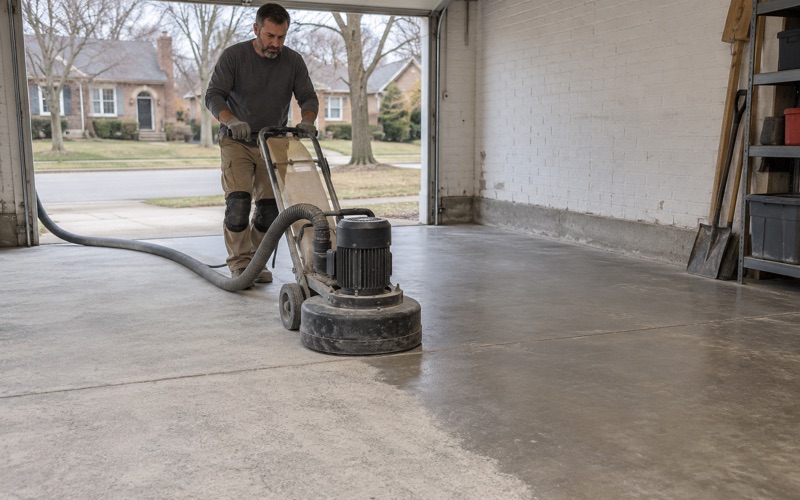
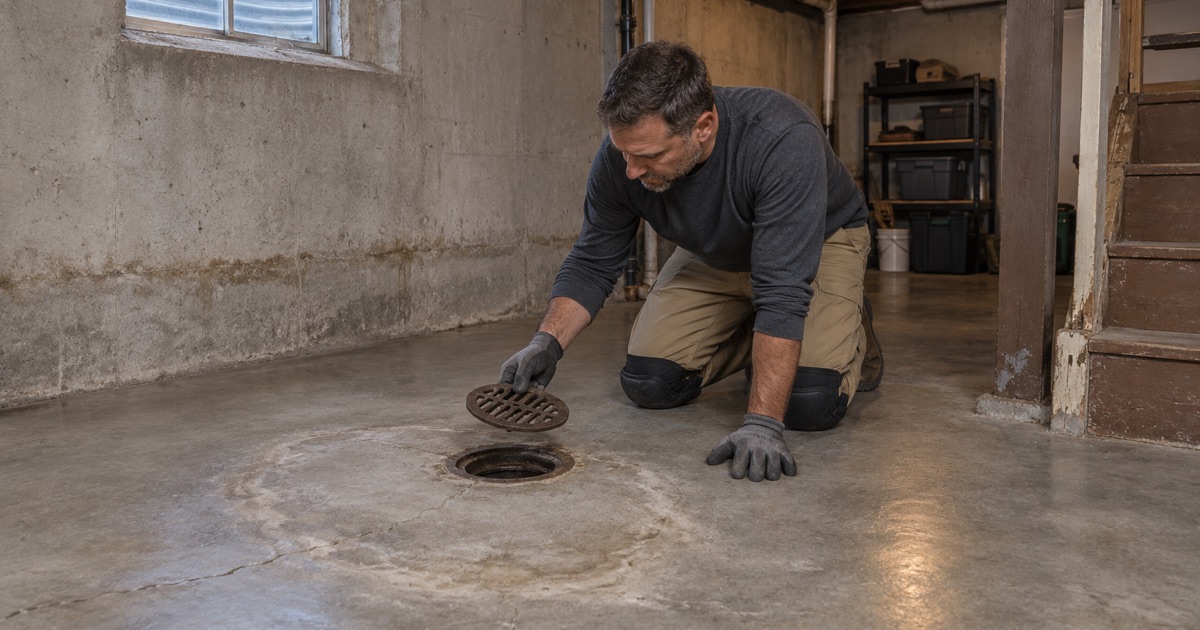
Concrete that has been sealed or painted gives a new coating nothing to grip, and acid etching does not reliably cut through either one. We diamond grind or shot blast the whole floor down to open concrete with a measurable profile. That step is what keeps a new garage coating from peeling off in sheets a year later, taking the old layer with it.
Moisture Testing a Garage Slab
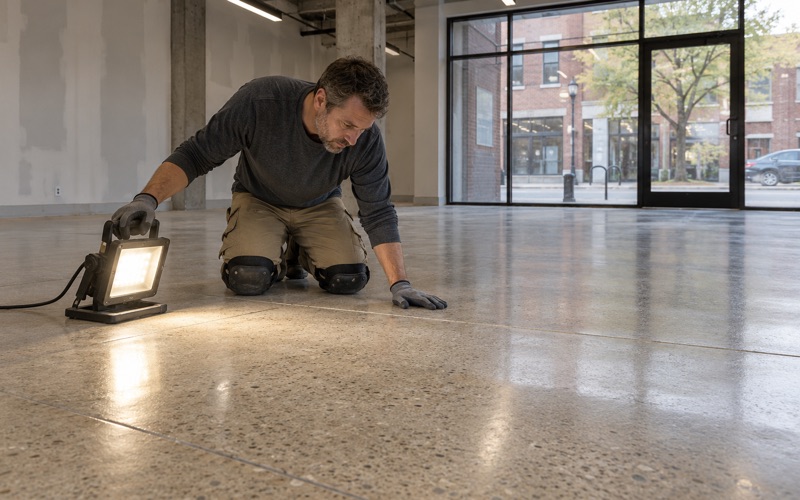
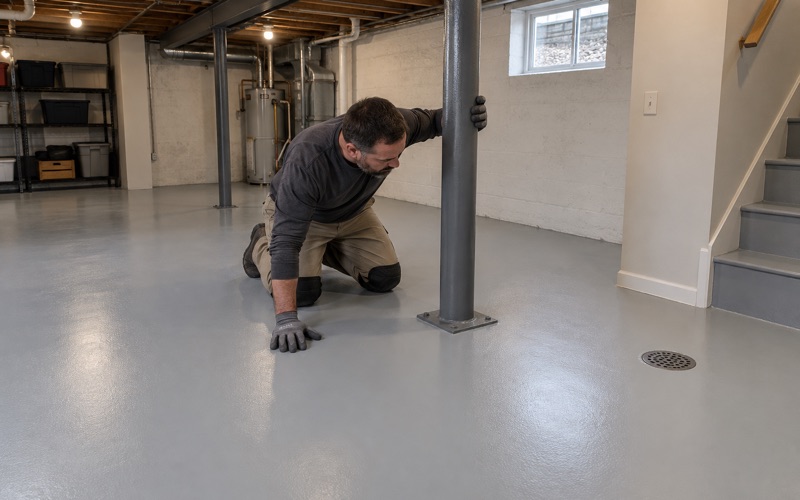
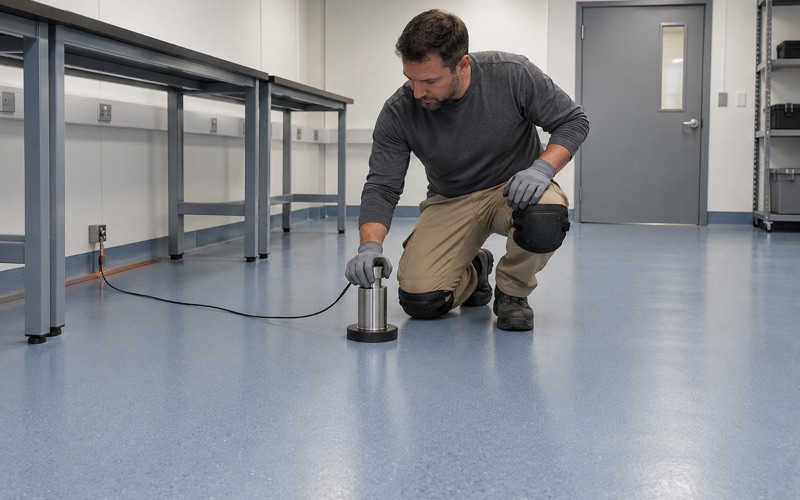
The model residential code, at IRC R506.2.3, exempts garage floors from the under-slab vapor retarder a house floor must have, so many garage slabs were poured straight onto the ground. We test before coating, starting with an ASTM D4263 plastic sheet for a first look and moving to calcium chloride kits or relative humidity probes when we need numbers. Moisture rising through an unprotected slab is a leading reason garage coatings let go.
Attached Garages and Evanston’s Vapor Retarder Amendment
When Evanston adopted the 2021 codes in April 2022, it rewrote that exception so it now covers only detached garages, utility buildings and other unheated accessory structures. An attached garage slab built under the new rule needs a vapor retarder under it, while a detached garage or an older attached one may have none. We find out which kind of slab we are coating before we pick a primer.
Reading the Cracks in a Garage Slab
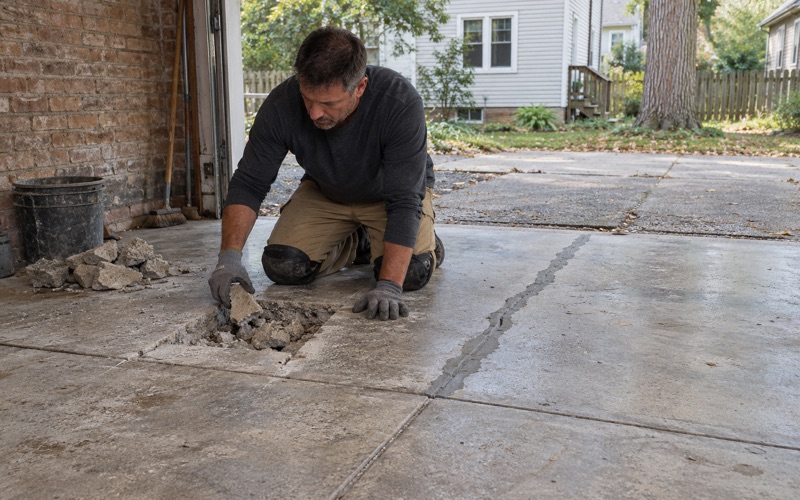
Shrinkage cracks, settled sections and cracks that open and close with the seasons look alike to most owners but call for different repairs. We map them before quoting, fill and level the stable ones, and tell you which ones the coating will simply follow. A coating moves with the slab under it, and it will not hold a moving crack shut.
Calcium Chloride Brine and Rock Salt on Bare Concrete
The calcium chloride brine and rock salt that winter roads send in on the tires soak into bare concrete, where repeated freezing and thawing scale and pit the surface. A sealed, seamless coating keeps that brine on top, where it can be squeegeed out the door. We build garage systems with that in mind, with a topcoat chosen to stand up to deicers and a texture that stays walkable when wet.
Coating a Garage in an Illinois Winter
Epoxy and polyaspartic resins need the slab warm enough, and dry enough at the surface, to cure the way the maker intends, and an unheated garage in January rarely is. We measure slab temperature and dew point spread on the day rather than trusting the calendar. If an unheated garage cannot hold the conditions the product needs, we say so and book it for spring.
Hot Tire Pickup and How to Prevent It
Hot tire pickup is when a warm tire softens a thin coating and pulls it off the floor as the car moves, usually in the patches where the car parks. It shows up most on thin, water-based kit coatings over poorly prepared concrete. A ground slab, a 100% solids epoxy or polyaspartic build, and a full cure before parking are what prevent it.
Garage Floor Kits Compared With a Professional Coating
Store-bought garage floor kits are usually thinner, often water-based, and rely on acid etching rather than grinding. The result can look good for a season and then peel under tires or salt. A professional job differs in the preparation, in the film thickness written into the proposal, and in the testing done before the first coat goes down.
What an Epoxy Garage Floor Costs
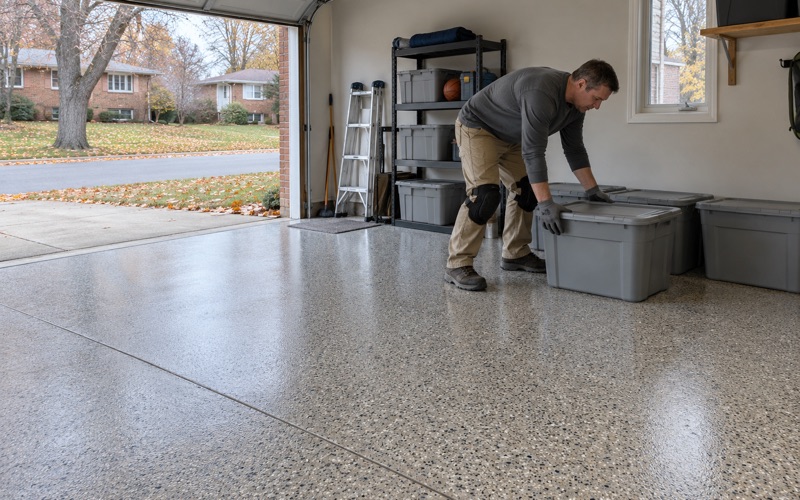
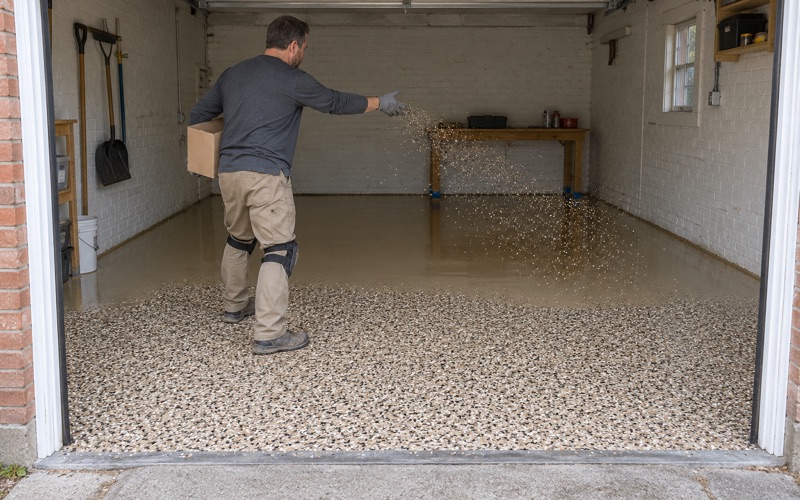
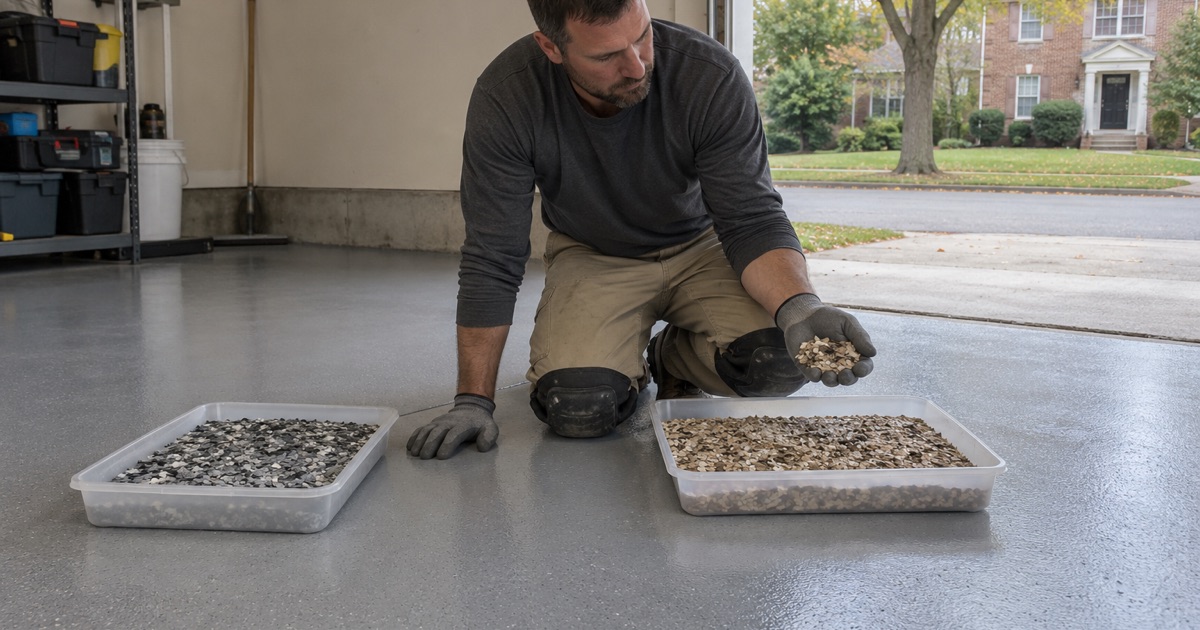
The price of an epoxy garage floor moves with the square footage, how much old coating has to come off, how many cracks need repair, and the system you choose, from a single solid color to a full flake broadcast under a polyaspartic topcoat. Moisture mitigation adds cost when a test calls for it. We price each of those as its own line, so you can see what moves the number.
What a Coating Warranty Usually Excludes
Floor coating warranties commonly exclude failure caused by moisture coming up through the slab, and most also exclude impact damage, harsh chemicals and the slab’s own movement. We read the exclusions out before the job is sold, with moisture named first. The warranty you sign should be the one you understood.